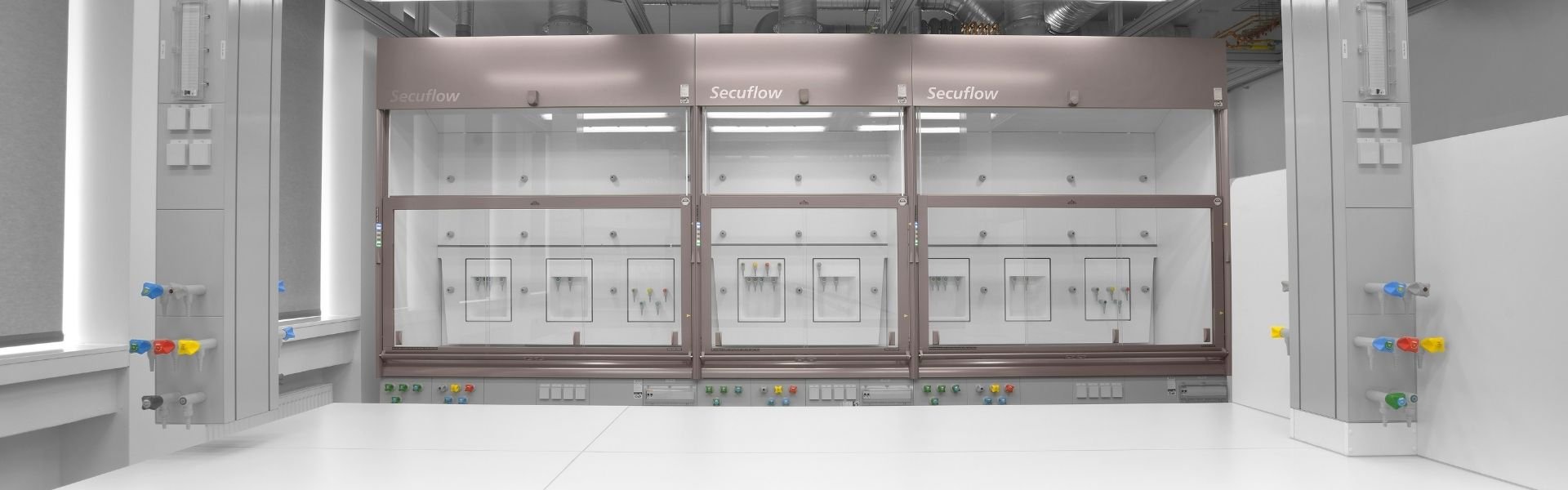
Laboratory Fume Hoods

THINKING FAR BEYOND SAFETY.
Laboratory Fume Hoods Manufacturer.
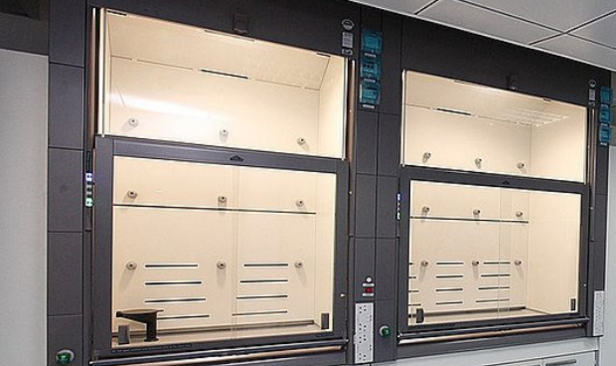
We understand that fume hoods are a critical and primary safety device to protect scientists and researchers from exposure to toxic and potentially fatal chemical vapours. At GD Waldner, we strive to constantly innovate and improve to deliver the highest degree of safety and energy efficiency in every fume cupboard that we make. Our hoods are tested in accordance with ASHRAE 110 and EN 14175 standards and designed to comfortably exceed the minimum thresholds in exacting lab settings.
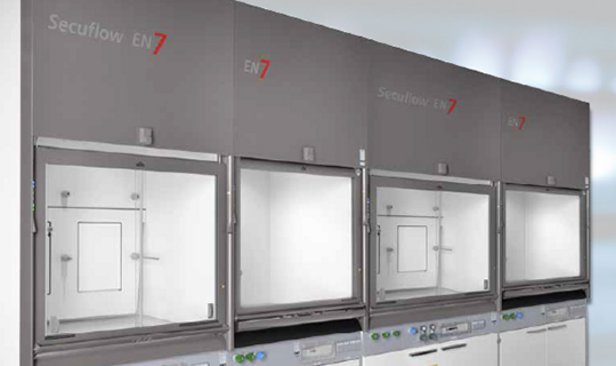
By optimising exhaust volumes, our Secuflow technology helps to save up to 33% in energy costs compared to conventional fume hoods. Ergonomics are important - our fume foods are height-adjustable with transparent glaze and intelligent details to be highly functional and digitally networked:
Thanks to Secuflow technology, GD Waldner laboratory fume hoods achieve excellent containment values and reliably protect your employees – with proven performance track record of comfortably exceeding DIN EN 14175 and ASHRAE 110 requirements. Our hoods seamlessly flush away harmful gases and particles from workspaces, even when exposed with high thermal loads. Safeguarding drivers of human progress is our founding principle.
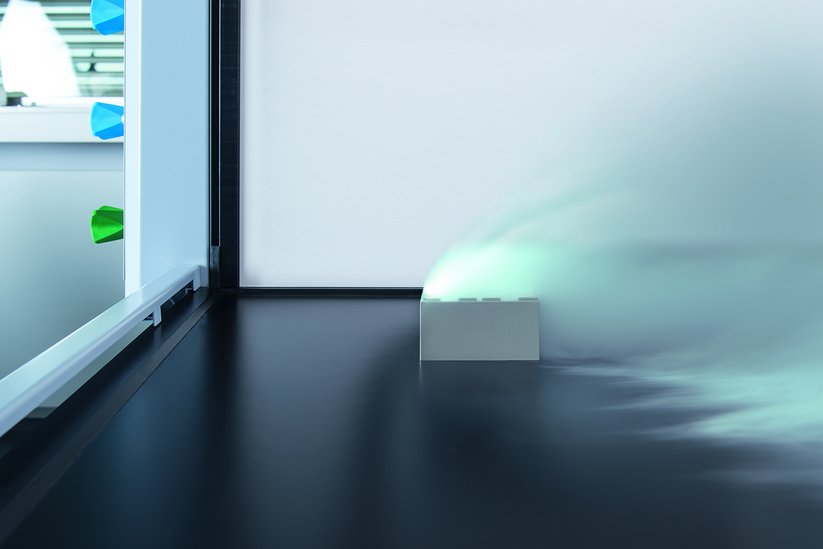
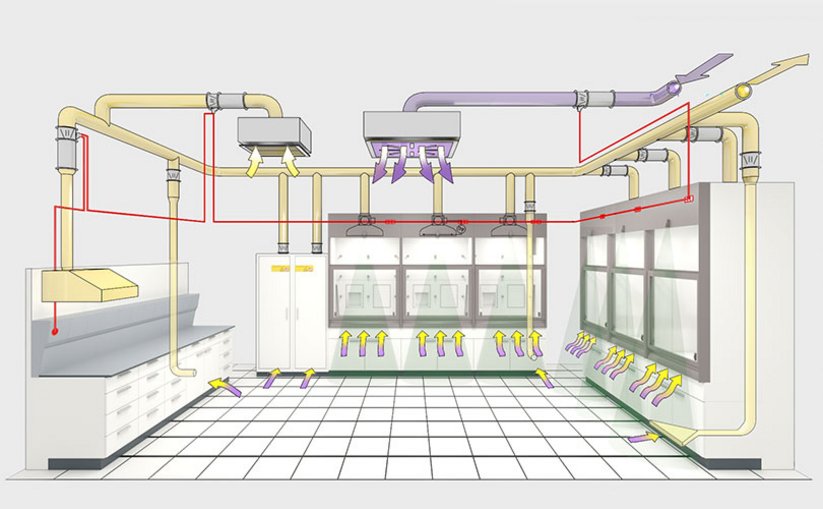
We understand that ventilation accounts for a large proportion of operating costs in a laboratory. GD Waldner laboratory fume hoods generate 33% less exhaust volumes compared to conventional systems, thereby offering unparalleled energy efficiency, while greatly enhancing safety.
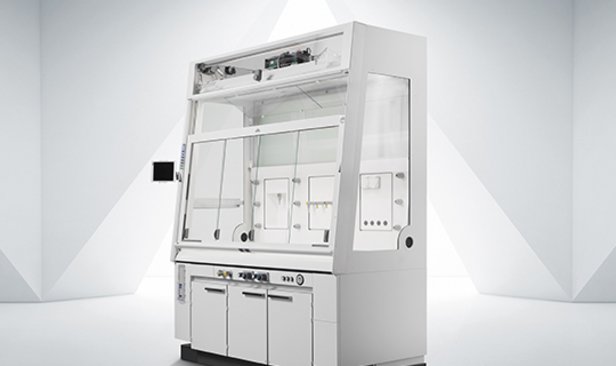
GD Waldner offers a wide range of fume cupboard solutions for every application, including bench mounted fume hoods, walk-in hoods, perchloric hoods and more. We also design and customize fume hoods to tailor more advanced applications. For less hazardous applications, our ventilated enclosures are an alternative option to deliver higher safety.
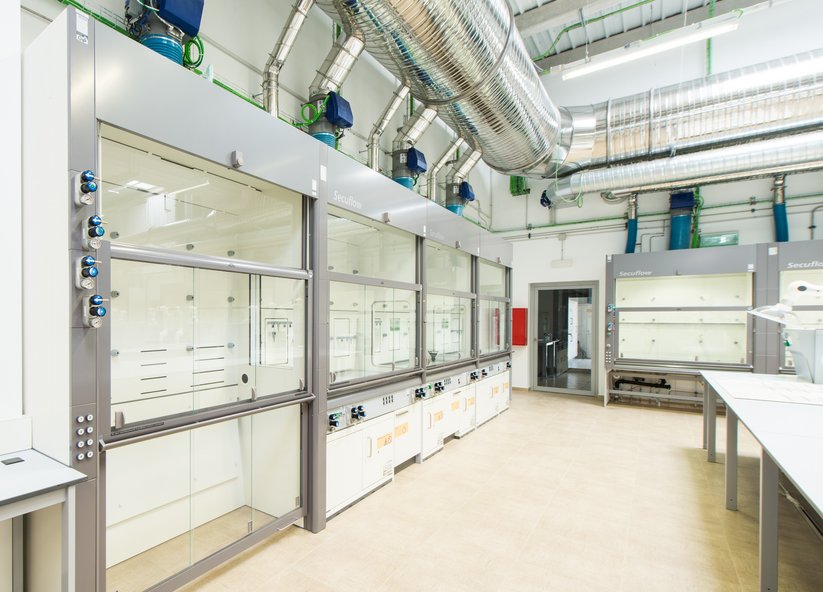
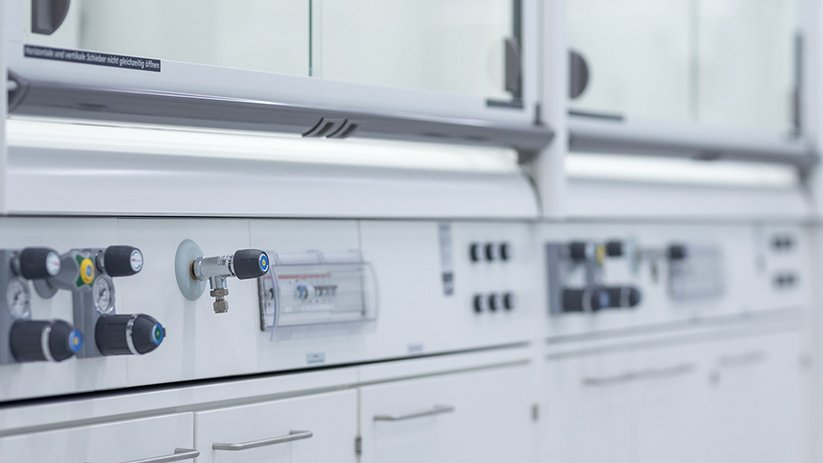
Our fume hoods come equipped with AC4 controllers that are designed and manufactured by Waldner in Germany. These controllers allow for superior air flow control and integrate seamlessly with Building Management Systems. These controllers provide you with a sophisticated lab ventilation system that intelligently adapts to your lab environment for a higher degree of safety at the lowest total cost of ownership.
Q: How much does it cost to buy a fume hood?
A: The cost of a laboratory fume hood can vary widely based on factors such as size, features, materials, and brand. Typically, prices can range from a few thousand to several thousand dollars. It is recommended to contact suppliers or manufacturers directly for accurate and up-to-date pricing information.
Q: How much does it cost to get a fume hood certified?
A: Certification costs for a fume hood can also vary. Certification ensures that the hood complies with safety and performance standards. Costs may depend on the certification agency, the type of certification required, and any additional services needed. It is best to consult with the certification body or the fume hood manufacturer for specific details.
Q: What is the common fume hood used in the laboratory?
A: The most common types of laboratory fume hoods include ducted fume hoods, ductless fume hoods, and canopy hoods. The choice depends on the specific needs of the laboratory, such as the type of experiments conducted and the chemicals used. Each type has its advantages and limitations, and the selection should be based on safety and functionality requirements.
Q: What is a good CFM for a fume hood?
A: The required CFM (Cubic Feet per Minute) for a fume hood depends on factors such as the hood's size, the types and quantities of chemicals used, and the desired face velocity. A common recommendation is to maintain a face velocity between 100 to 120 feet per minute (fpm). However, it is crucial to consult with safety guidelines, manufacturers, or a ventilation engineer to determine the appropriate CFM for your specific laboratory setup.